

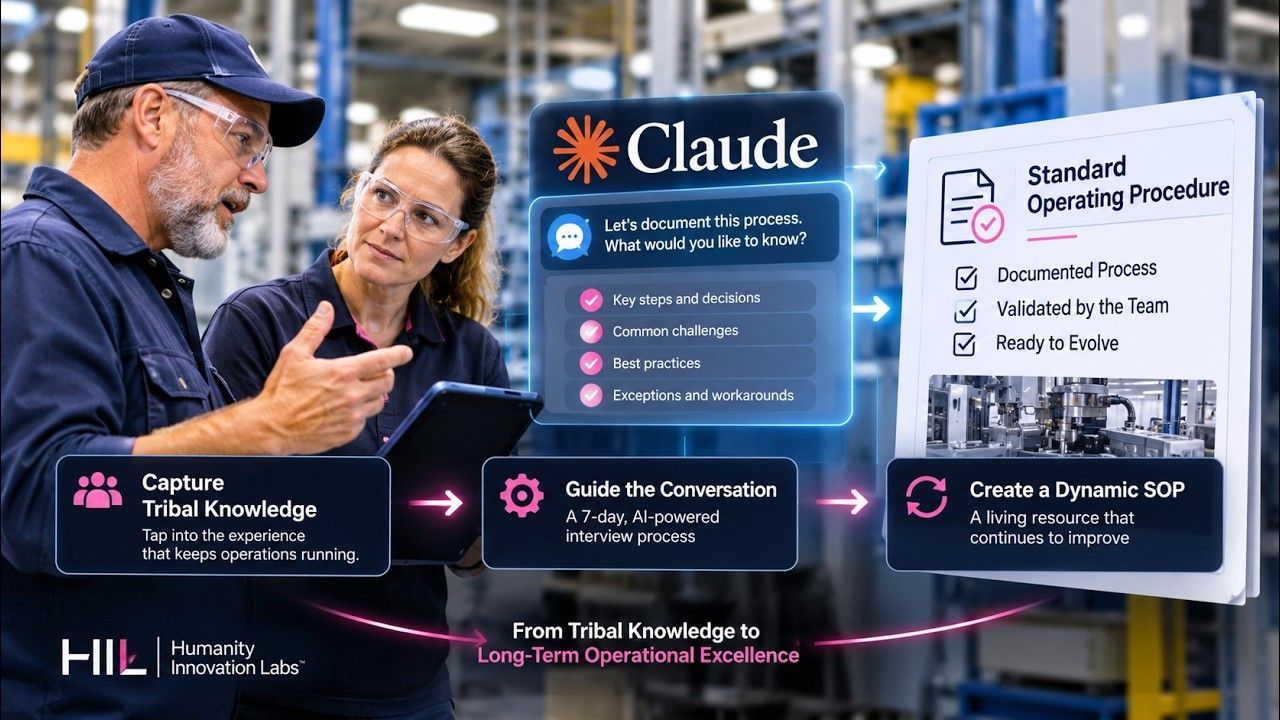
Workforce-Centered AI Adoption: Turning Institutional Knowledge Into Scalable Systems - Virtual

Most industrial organizations are not starting from zero.


They are starting from systems that already work—just not in ways that scale easily.

Legacy workflows often represent years of optimization under real constraints. They are imperfect, but they are functional. This is why modernization is rarely a technical problem alone—it is a continuity problem.

The goal is not to replace what works.
The goal is to reduce friction while preserving operational stability.

The Core Challenge: Hidden Friction in “Working” Systems

Legacy environments often appear stable on the surface. But beneath that stability are friction points such as:

  • Manual data transfer between systems
  • Repeated re-entry of the same operational information
  • Fragmented communication across teams
  • Decision-making bottlenecks at key roles
  • Shadow processes that exist outside official workflows
  • 

These inefficiencies are often normalized because the system still “runs.”

But AI does not optimize static systems.
It amplifies whatever structure it is placed into.

Why Mapping Current Workflows Comes First

A critical mistake in AI adoption is starting with tools instead of processes.

Without understanding how work actually happens today, organizations risk:

  • Automating inefficiency
  • Embedding outdated logic into new systems
  • Increasing complexity instead of reducing it
  • Creating resistance from the workforce

Workflow mapping is not documentation—it is diagnostic work.

It reveals:

  • Where time is actually spent
  • Where decisions are made versus where they should be made
  • Where information breaks down
  • Where human judgment is essential versus repetitive

The Shift: From Static Processes to Adaptive Systems

AI-enabled operations are not defined by automation alone. They are defined by adaptability.

This includes:


  • AI-assisted decision support (not replacement)
  • Context-aware workflow augmentation
  • Predictive insights embedded into operations
  • Reduced dependency on manual coordination
  • Incremental rather than disruptive modernization
  • 

The key is not transformation velocity.
It is transformation alignment.

What Industry Patterns Show

  1. Disruption increases resistance faster than capability increases adoption
    Even technically successful systems fail if workforce trust is not maintained.
  2. Incremental AI integration outperforms large-scale replacement strategies
    Layered adoption leads to higher sustainability than “big bang” modernization.
    
  3. Workflow clarity is the strongest predictor of AI success
    The more clearly a process is understood, the easier it is to enhance with AI.

Preparing for the BBB AI Hub Workshop

Participants should come prepared to examine a simple but critical idea:


AI does not fix broken workflows—it exposes them.

The opportunity is not to rebuild everything at once, but to modernize intentionally, without disrupting the systems and people that already keep operations running.

Recommended Reading & Supporting References

Share this article

Recent Posts

From Tribal Knowledge to AI-Powered SOPs — Modernizing Industrial Maintenance video thumbnail
By Humanity Innovation Labs • November 12, 2026
Explore how AI can help capture tribal knowledge and turn industrial maintenance expertise into clear, repeatable standard operating procedures.

Modernizing Legacy: Why the Future Starts With Understanding the Past
By Stephanie Hubbard • November 12, 2026
Modernization is more than a tech upgrade. Learn why understanding people, workflows, tribal knowledge and data comes before AI in industrial operations.

Business owner at a laptop with glowing stepping stones representing week-by-week AI learning
By Mike Regennitter • November 11, 2026
Plan on 4 to 6 hours a week, minimum. A 52-hour AI build replaced three paid tools. Here's what the AI learning curve really looks like for business owners.
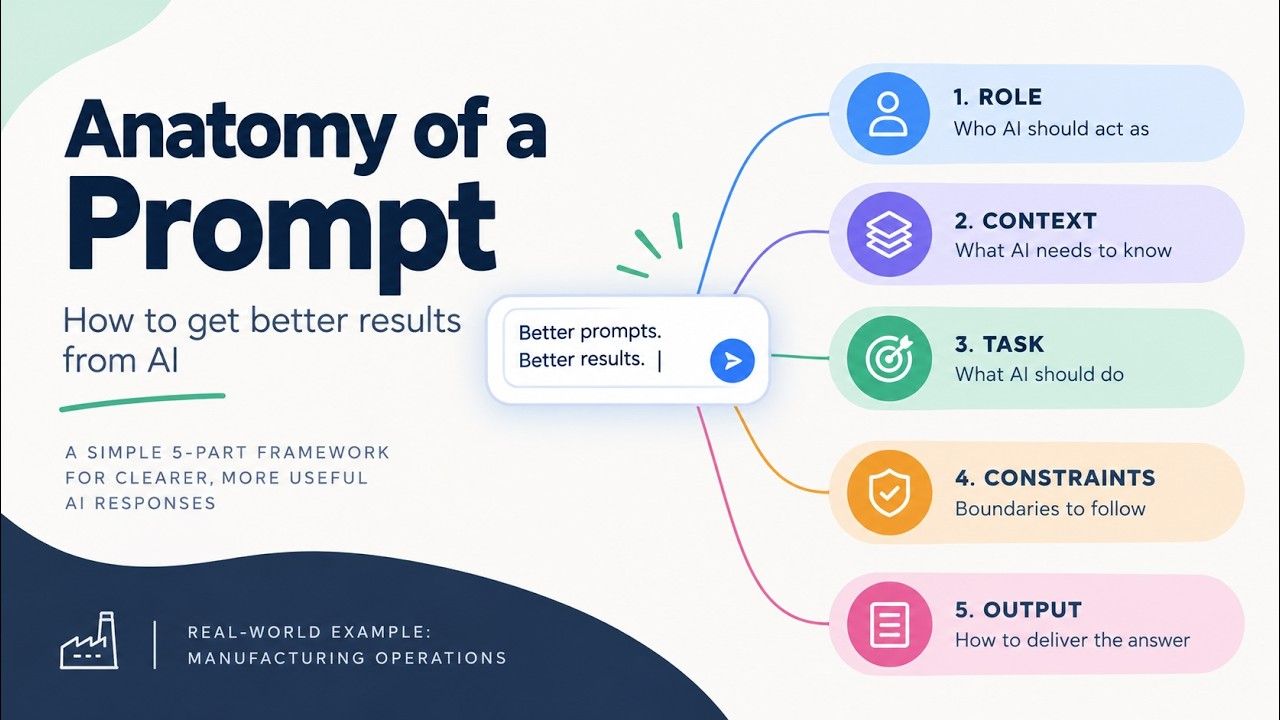
The Anatomy of a Good Prompt
By Humanity Innovation Labs • October 23, 2026
Use goal, context, audience, constraints, source material, and output format to get better results.
Turn a Process into a Workflow
By Humanity Innovation Labs • October 23, 2026
Map inputs, steps, decisions, owners, outputs, and review points before automating anything.

By Stephanie Hubbard • September 28, 2026
One of the most valuable things I’ve learned is that AI is only as useful as the knowledge we give it. Every small business has tribal knowledge. It lives in the heads of the people who have been there the longest—the person who knows which customer needs a different approach, why a certain process is done “that way,” how to solve a problem when the standard procedure doesn’t work, or simply has the intuition to know when something doesn’t look right. That knowledge is incredibly valuable. But it is also incredibly vulnerable.
September 14, 2026
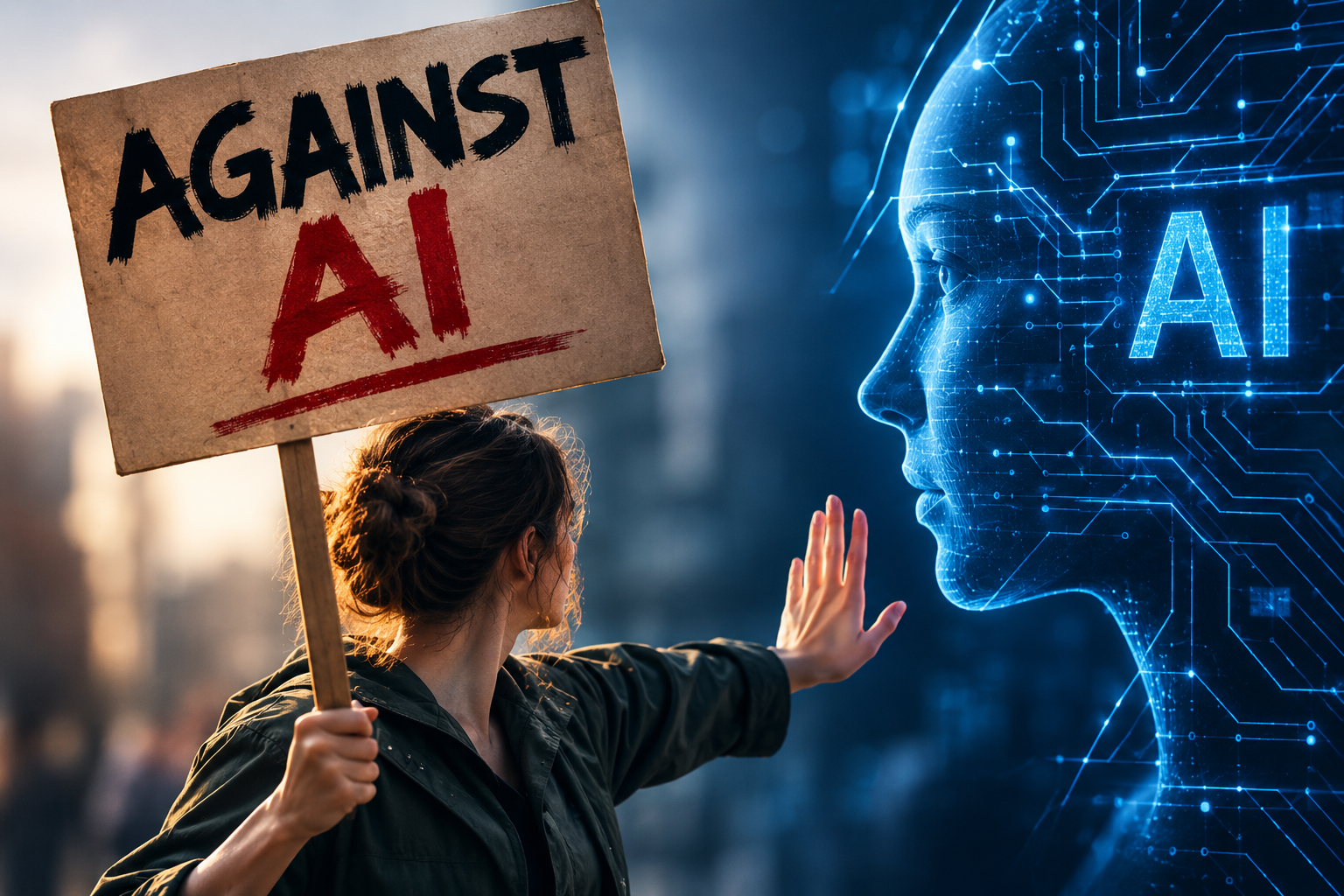
Artificial intelligence may be the most transformative technology of our lifetime. I believe that. I also believe something else: transformative technology deserves transformative levels of responsibility.

leader building an AI adoption strategy for their organization
By Mike Regennitter • September 11, 2026
Everyone with a ChatGPT tab thinks they've adopted AI. A real AI adoption strategy means architecture, policy, and oversight, not a tool download.
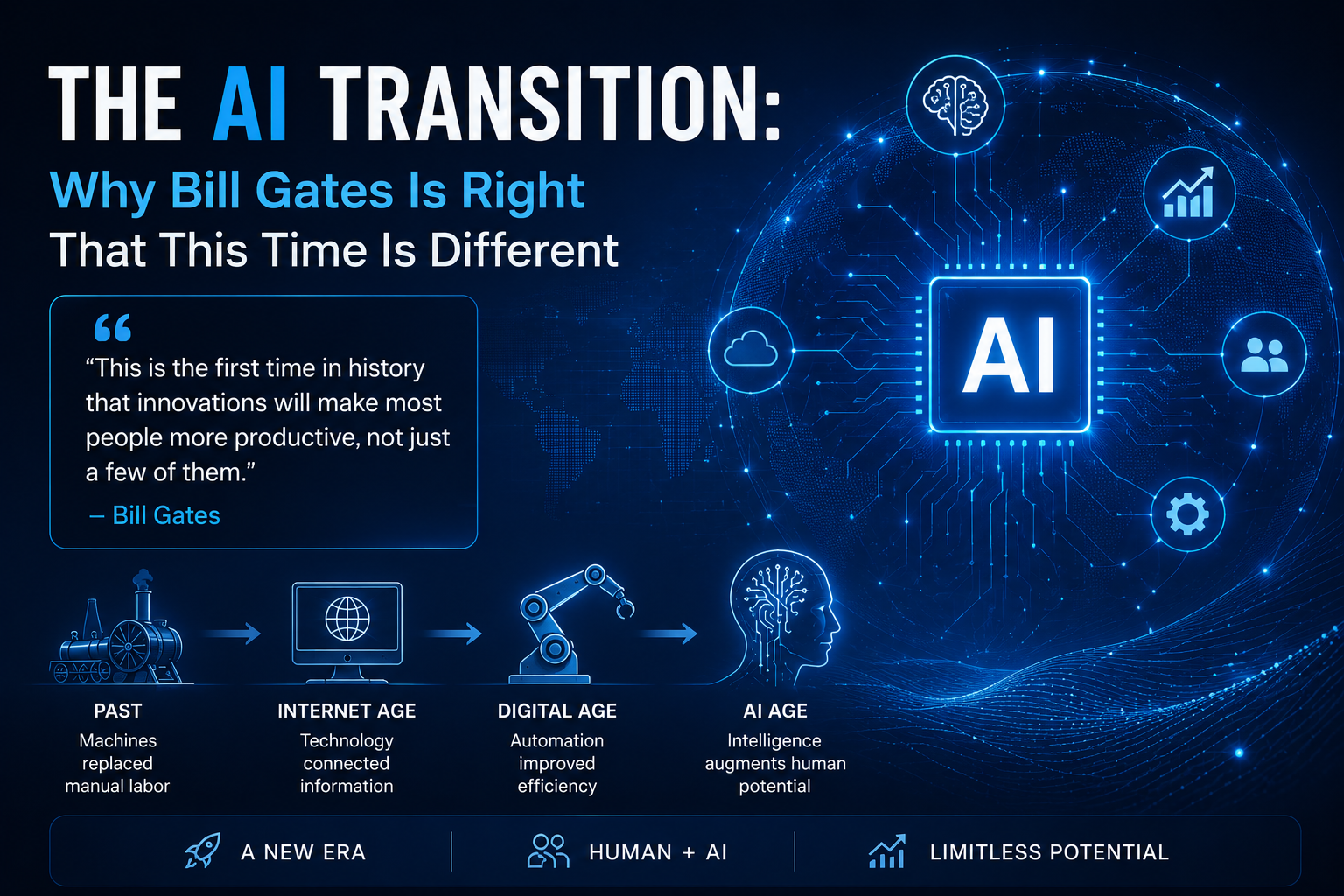
By Jonathan Liebert • September 2, 2026
For most of modern history, every major technological disruption has come with the same reassurance: we have been here before. The Industrial Revolution displaced physical labor, but it also created factories, industries and entirely new categories of work. Computers eliminated some jobs while creating software developers, IT departments, digital marketers and an information economy. The internet disrupted everything from newspapers to retail, while simultaneously creating businesses and professions we could barely have imagined a generation earlier. So when concerns about artificial intelligence and jobs arise, it is tempting to reach for the same familiar conclusion: technology changes work, people adapt, new industries emerge and ultimately we create something new. But on August 26, 2026, Bill Gates published an essay on GatesNotes titled “The Turbulent AI Era Is Here. The Choices We Make Now Are Critical .” In it, Gates makes a much more provocative argument about the moment we are entering. He warns that AI is not simply another chapter in the long history of technological disruption and that society is not adequately preparing for the transition ahead. One section of his essay is titled with five words that immediately caught my attention: “This time really is different.” That idea is the starting point for this essay. What follows is not an attempt to predict the future with certainty, nor do I agree automatically with every policy solution Gates proposes. Rather, his essay raises a set of questions that I believe business leaders, policymakers, educators, workforce leaders and communities need to wrestle with now: