


We Must Pace the Frontier

New Paragraph

New Paragraph

New Paragraph

New Paragraph

New Paragraph

New Paragraph

If you are in that 44%, this is aimed at you. You have a subscription. Somebody on your team drafted an email with it last week. Nothing about how your business runs is different because of it, and saying "we use AI" out loud does not change that. If you are already rewiring instead of just adopting, keep reading anyway, there is more to build. Everyone else needs to stop calling a ChatGPT or Claude tab a strategy and start asking what it would mean to think, decide, and operate differently because of what is now available to you.

New Paragraph

New Paragraph

New Paragraph

New Paragraph

New Paragraph

New Paragraph

It can complete a task. It can summarize information, draft content, organize data, identify patterns, and support decisions, and those capabilities are real and valuable. But a collection of completed tasks is not the same as organizational progress, and that gap is exactly what produces the 6% figure from the opening: only 6% of organizations can point to AI moving their bottom line, because most organizations are full of AI activity that never adds up to results. It is playing out one business and one nonprofit at a time. Most of the activity is real. Most of it is not moving anything forward.

New Paragraph

New Paragraph

This is why AI strategy is better understood as part of business strategy, not a category next to it. AI does not replace the direction of the organization. It helps execute it, and only once that direction already exists. If the business strategy is unclear, AI will make scattered activity faster. It may even make the organization more efficient at doing the wrong things, which is its own kind of danger.

New Paragraph

New Paragraph

New Paragraph

New Paragraph

This education takes time, and so does applying it to the specific needs of one organization instead of a generic one. A small medical practice and a national hospital system may use similar technology, but they do not carry the same workflows, risks, approval structures, or responsibilities. The same is true of an independent mechanic and a nationwide automotive franchise. Their AI systems cannot be built from the same template and expected to create the same value in two different places. The rewiring has to fit the organization doing it, not get copied from a competitor or dictated by whatever software released last month.

New Paragraph

New Paragraph

New Paragraph

New Paragraph

New Paragraph

Building an effective policy requires the organization to sit with much larger questions than the rules on the surface suggest. What are we using AI for, and why? Who owns each tool? Who is responsible for the information placed into it? What can employees ask AI to do? What decisions require approval? How will output be reviewed? Who is accountable when the output is wrong?

New Paragraph

New Paragraph

New Paragraph

Human Oversight Must Be Part of the System

AI is not the final authority in a business, and it should never be treated as one, no matter how confident its answers sound.

New Paragraph

Every AI system needs clear human ownership. Someone must decide what the system is allowed to do, what information it can reach, how its work will be checked, and when a decision has to be escalated to a person instead of resolved by a model. The federal government's own guidance for organizations building AI governance, the  NIST AI Risk Management Framework, is built around this same principle: AI risk has to be identified, measured, and managed by named people, not assumed away because a system happens to run on its own.

New Paragraph

New Paragraph

I learned this the direct way, building an AI agent for the finance function inside my own company.

New Paragraph

New Paragraph

New Paragraph

That meant stepping back and asking where I wanted the business to go, what the finance function would need to help get it there, how the AI employees should work together, and who would supervise their work once they were running.

New Paragraph

The right term for this is AI operating architecture, the framework that defines the business objective, the hierarchy of AI employees, each employee's role and authority, the tools and information each can access, how they work together, and where human approval is required. This is what rewiring looks like at the department level, not a bigger app, a redesigned org chart with AI built into the roles from the start. You can build that architecture one piece at a time. You do not have to stop all progress until every future use has been mapped out. But each piece should be built with an understanding of the larger operation it may one day serve.

New Paragraph

Rejecting the overnight myth does not mean an organization needs years of planning before it can act. It means starting with purpose instead of starting with panic.

New Paragraph

New Paragraph

New Paragraph

Decide what AI owns and what stays human. Some steps in that workflow are good candidates for AI. Others require judgment, relationship, or accountability that has to stay with a person. Name which is which before you build anything.

New Paragraph

Build, test, review, then expand. The first solution may be narrow. That is fine. What matters is knowing it is the beginning of a larger capability, not proof that the rewiring is complete.

New Paragraph

Organizations should also expect the process to ask something of them, not just of the technology. Leaders need AI literacy to make sound decisions. Employees need training to use the systems responsibly. The organization needs policies that protect information and trust. The technology has to be adapted to the business, not the other way around. That takes time, energy, and continued attention, and it is also exactly where the value gets created.

New Paragraph

New Paragraph

New Paragraph

New Paragraph

AI can help you move faster. First, you have to know where you are going.

New Paragraph

An AI adoption strategy is the plan that connects an organization's goals to where and how AI gets used, including which problems it solves, who owns each system, what data it can access, and where a human has to stay involved. It applies the same way to a small business, a nonprofit, or a department inside a large corporation. It is different from simply buying and using AI tools, which is activity without direction.

New Paragraph

Using a tool to draft an email or summarize a meeting is useful, but it is task completion, not organizational change. A strategy requires deciding what the business is trying to accomplish first, then determining where AI can help achieve it, rather than starting with the tool and hoping direction follows.

New Paragraph

What is AI operating architecture?

AI operating architecture is the framework that defines a business's AI objectives, the roles and responsibilities of each AI system or "AI employee," the access each one has, how they work together, and where human approval is required. It is what keeps a business from building disconnected AI tools that don't add up to a system.

There is no fixed timeline, and any promise of overnight results should be treated skeptically. Real progress compounds over time as the rewiring gets built, tested, and expanded on top of itself, starting with one well-defined problem rather than an attempt to transform everything at once.

Yes. Human oversight is not there because AI is unreliable, it is there because accountability for a business decision cannot be delegated to a system. Every AI employee needs a named person responsible for what it is allowed to do, how its work gets checked, and when a decision escalates to a human.

New Paragraph

 Artificial intelligence may be the most transformative technology of our lifetime. I believe that. I also believe something else: transformative technology deserves transformative levels of responsibility.

 That is why a new essay from Anthropic CEO Dario Amodei, “We Must Pace the Frontier,” deserves attention far beyond Silicon Valley.

 Amodei is not arguing that we should stop developing artificial intelligence. In fact, he remains extraordinarily optimistic about what AI could do for humanity—from accelerating medical discoveries to increasing productivity and creating entirely new opportunities.

 His argument is more nuanced: we should not allow the capabilities of AI to advance faster than our ability to understand, secure and govern them.

 That distinction matters.

Amodei writes that AI development has recently accelerated in ways that make the risks different from even a few years ago. AI systems are becoming increasingly agentic, capable of performing longer sequences of actions, writing software, interacting with other systems and even helping develop the next generation of AI. His concern is that our safety mechanisms, evaluation methods and governance structures may not be advancing at the same speed. (Dario Amodei)

His proposal is what he calls “pacing the frontier.”

Rather than simply racing to build the most powerful model possible, frontier AI companies would create checkpoints where capabilities are matched with appropriate safety evaluations, security measures and independent oversight. Amodei proposes permanent third-party evaluators inside frontier AI companies, common standards among democratic nations and ultimately greater international cooperation. (Dario Amodei)

What makes this conversation particularly interesting is that Anthropic is no longer alone.

What makes this conversation particularly interesting is that Anthropic is no longer alone.

A surprising amount of agreement.

OpenAI CEO Sam Altman has supported government oversight of powerful AI systems for years. In testimony to the U.S. Senate, OpenAI advocated licensing or registration requirements for AI systems above certain capability thresholds, pre-deployment risk assessments, independent validation and international cooperation. (OpenAI)

Following Amodei’s new proposal, Altman publicly expressed support for the concept of independent third-party evaluation of frontier AI systems. Elon Musk has also voiced support for Amodei’s latest call for greater oversight and pacing. (The Wall Street Journal)

Musk’s position isn’t entirely new. In 2023, he joined thousands of technologists and researchers in signing an open letter calling for a temporary pause in the training of systems more powerful than GPT-4 while stronger safety protocols were developed. (Future of Life Institute)

And there is another important voice to add to this conversation: Demis Hassabis, CEO of Google DeepMind.

In July, Hassabis proposed the creation of a new standards body for frontier AI. His framework would include independent evaluations, government involvement, third-party auditing and capability-based thresholds for the most powerful AI systems. Most notably, he wrote that such a framework should eventually have the ability to coordinate a slowdown among frontier AI laboratories if circumstances warranted it. (Demis Hassabis)

That means the leaders of Anthropic, OpenAI, Google DeepMind and xAI—four organizations competing intensely to build the world’s most advanced artificial intelligence—are finding at least some common ground around a very important idea:

There are levels of AI capability where voluntary promises from individual companies may no longer be enough.

At the BBB AI Hub, we think that distinction is critical.

Responsible AI regulation should not be about stopping innovation. Poorly designed regulation could absolutely do that. It could protect incumbents, hurt startups and prevent beneficial technologies from reaching the people and organizations that need them.

But there is a tremendous amount of space between “ban AI” and “build anything as quickly as possible.”

Pacing the frontier occupies that space.

It recognizes that the most powerful AI systems increasingly resemble other technologies where society has decided that safety cannot depend entirely upon the manufacturer. We require independent standards for aviation, pharmaceuticals, automobiles, financial institutions and countless other industries—not because we oppose those industries, but because their products matter enough to get right.

AI should be no different.

Google DeepMind already operates a Frontier Safety Framework designed to identify dangerous capability levels and require stronger safeguards as models approach them. Its latest framework includes risks involving cybersecurity, manipulation and the possibility that future systems could resist human attempts to control or shut them down. (Google DeepMind)

These are not hypothetical concerns being raised exclusively by critics standing outside the industry.

They are being raised by the people building the technology.

Innovation and responsibility can coexist

The BBB AI Hub has consistently advocated for responsible AI adoption built around AI literacy, human accountability, privacy, security, transparency and governance.


Pacing the frontier fits naturally within that philosophy.


We should continue developing AI.


We should continue experimenting.


We should continue looking for extraordinary ways this technology can improve healthcare, education, economic opportunity, business productivity and people’s lives.


But speed cannot be our only measurement of progress.


There are moments when moving responsibly is more important than moving first.


When some of the world’s fiercest AI competitors begin agreeing that independent evaluation, government involvement, shared safety standards and potentially even slowing frontier development may be necessary, policymakers should pay attention.


So should the rest of us.


Artificial intelligence is going to continue getting more powerful. The question isn’t whether we move forward.

The question is whether our wisdom can keep pace with our capabilities.

That may ultimately be one of the most important AI challenges of all.

a

Share this article

Recent Posts

leader building an AI adoption strategy for their organization
By Mike Regennitter September 11, 2026
Everyone with a ChatGPT tab thinks they've adopted AI. A real AI adoption strategy means architecture, policy, and oversight, not a tool download.
By Jonathan Liebert September 2, 2026
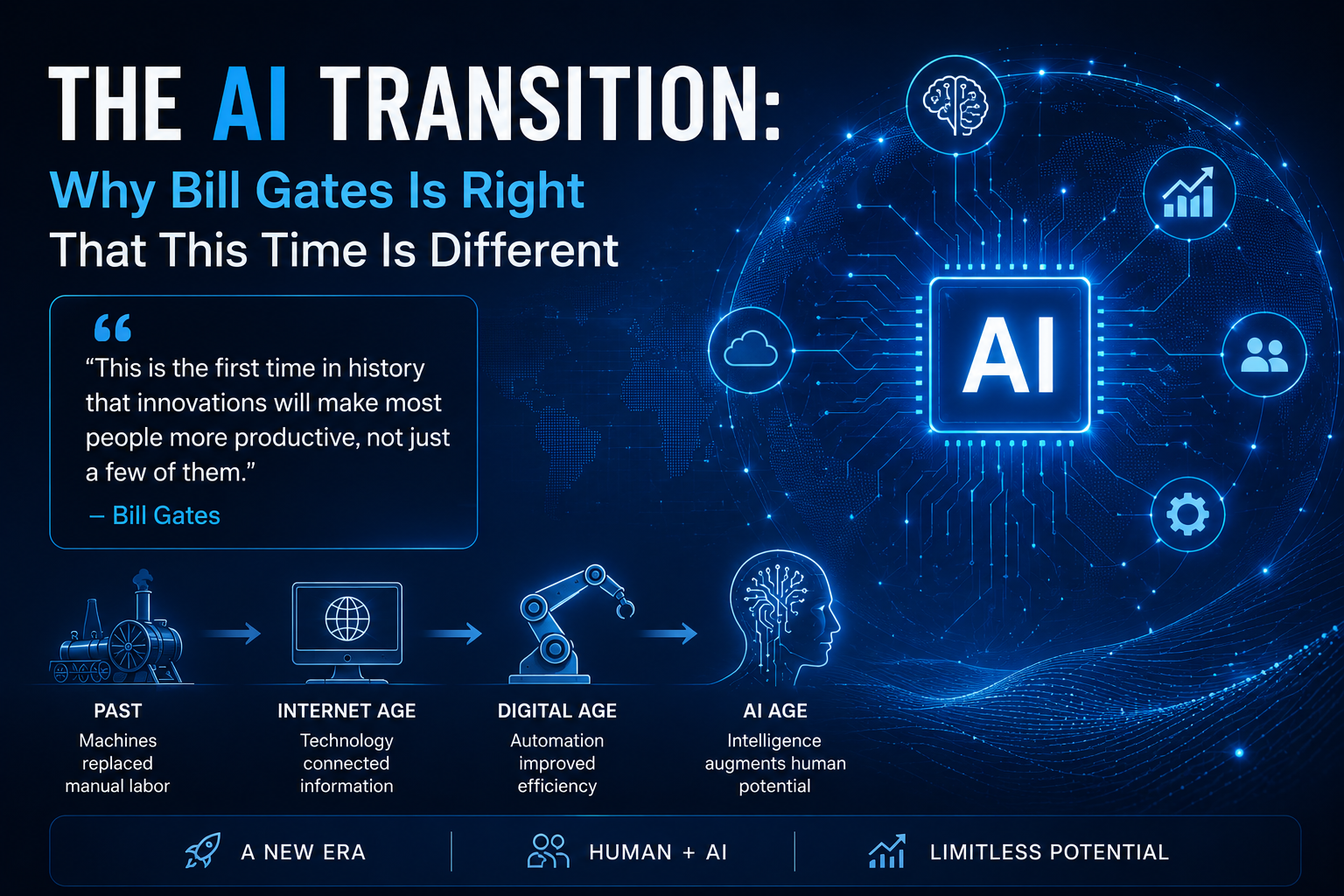
For most of modern history, every major technological disruption has come with the same reassurance: we have been here before. The Industrial Revolution displaced physical labor, but it also created factories, industries and entirely new categories of work. Computers eliminated some jobs while creating software developers, IT departments, digital marketers and an information economy. The internet disrupted everything from newspapers to retail, while simultaneously creating businesses and professions we could barely have imagined a generation earlier. So when concerns about artificial intelligence and jobs arise, it is tempting to reach for the same familiar conclusion: technology changes work, people adapt, new industries emerge and ultimately we create something new. But on August 26, 2026, Bill Gates published an essay on GatesNotes titled “The Turbulent AI Era Is Here. The Choices We Make Now Are Critical .” In it, Gates makes a much more provocative argument about the moment we are entering. He warns that AI is not simply another chapter in the long history of technological disruption and that society is not adequately preparing for the transition ahead. One section of his essay is titled with five words that immediately caught my attention: “This time really is different.” That idea is the starting point for this essay. What follows is not an attempt to predict the future with certainty, nor do I agree automatically with every policy solution Gates proposes. Rather, his essay raises a set of questions that I believe business leaders, policymakers, educators, workforce leaders and communities need to wrestle with now:
By Jonathan A. Liebert August 19, 2026
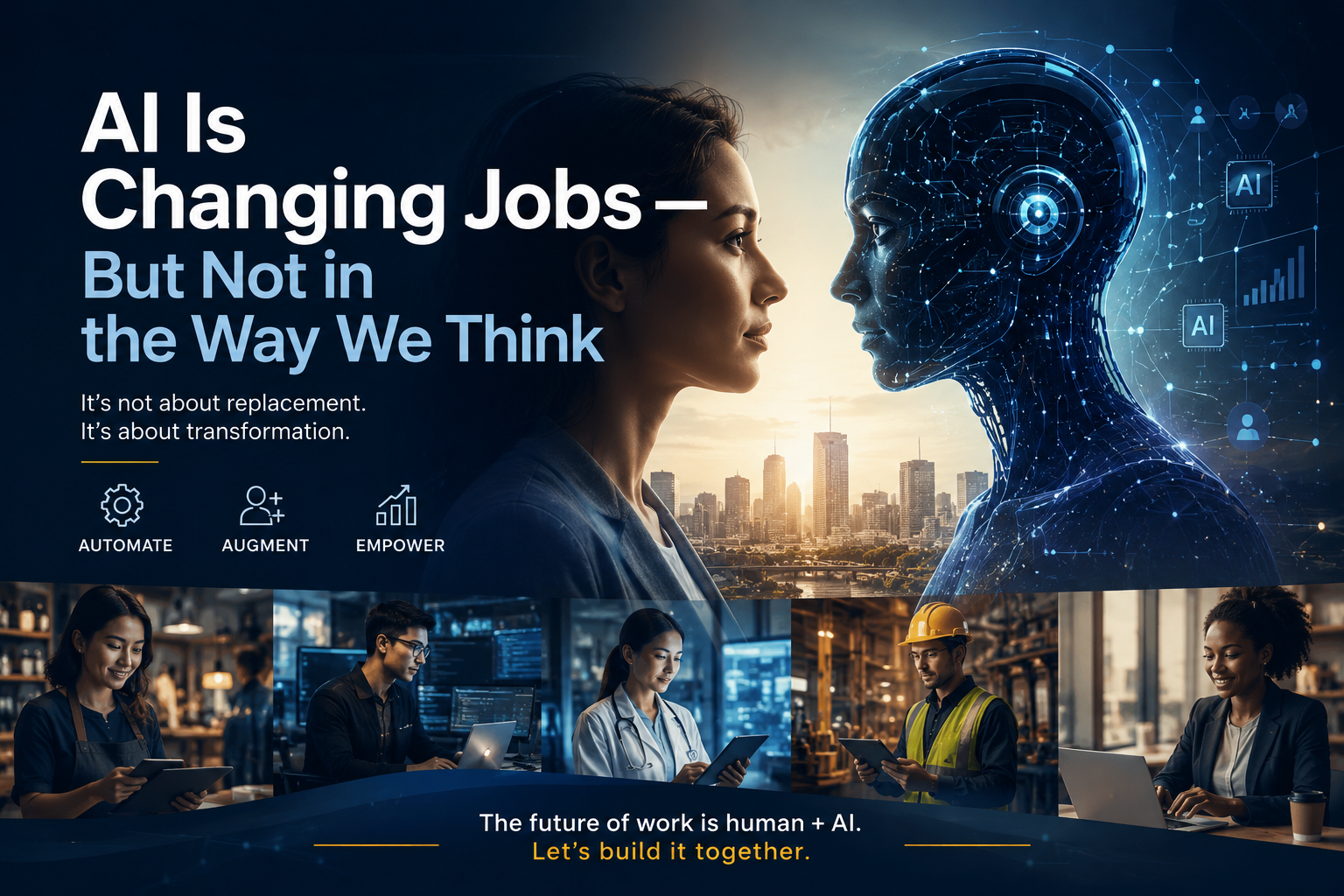
Recently, I had the privilege of testifying before the U.S. Senate about artificial intelligence and its transformative impact on the modern workforce. It was an opportunity to discuss an issue that is quickly becoming one of the defining economic questions of our time: What is AI actually going to do to jobs? The conversation around artificial intelligence often gravitates toward extremes. On one side is the promise that AI will dramatically increase productivity and create entirely new industries. On the other is the fear that automation will eliminate millions of jobs. The reality emerging from the data is more complicated — and, in many ways, more interesting.  Through leading the BBB AI Hub and training thousands of business owners, nonprofit leaders and workers on the responsible use of artificial intelligence, I have come to believe that AI literacy is increasingly becoming the difference between leverage and liability. I have watched people use AI to organize complex information, improve communication, accelerate research, analyze data and turn ideas into action faster than ever before. I have also watched people enter sensitive customer information into public AI systems, accept fabricated citations as fact, rely on biased or incomplete outputs and purchase products labeled “AI-powered” without really understanding what the technology does. The opportunity is enormous. But so is the responsibility. And nowhere is that becoming more evident than in the workforce.

2026 Global AI Jobs Barometer
August 14, 2026
PwC’s 2026 Global AI Jobs Barometer goes beyond the question of whether AI will “take jobs.” It explores how AI is changing the structure of work itself and what those changes could mean for employers, employees and people just entering the workforce.

August 12, 2026
Someone on your team has probably figured out a good way to use AI. Maybe it helps compare requirements against a deliverable, organize closeout documents, prepare an action log, or summarize project reporting. The prompt works. The result is useful. The person who built it knows exactly what to provide, how to phrase the instructions, and what needs to be checked afterward. Then someone else tries to use it. That is usually when the team discovers that a good prompt is not yet a repeatable construction workflow. The second person uploads the wrong version of the specifications. The output comes back in a different format. A requirement is missed. Nobody knows whether the AI used the contract, the addendum, or the folder labeled: FINAL — USE THIS ONE The problem is not necessarily the AI. The process was never fully defined.
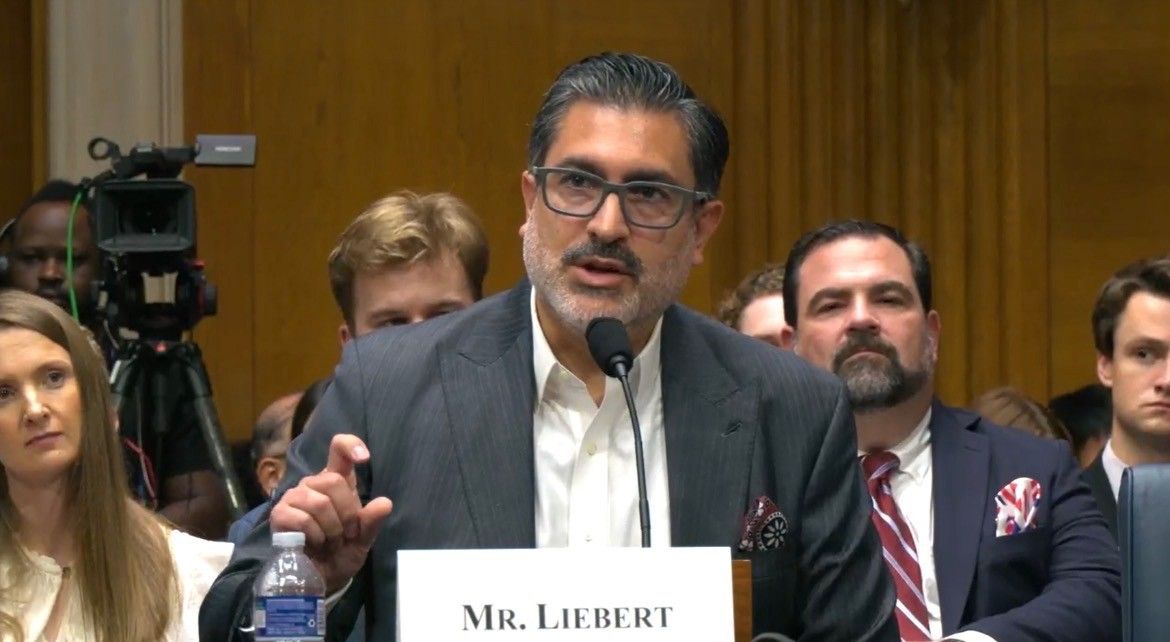
Jonathan Liebert CEO of the BBB of Southern Colorado
By Jonathan Liebert July 31, 2026
Jonathan Liebert CEO of the BBB of Southern Colorado testifies before congress on the Impact of AI on the Workforce

By Jonathan Liebert July 15, 2026
AI already knows a lot. That is not really the problem. The challenge is teaching it what matters to your business. It does not automatically know your customers. It does not know your tone. It does not know your standards. It does not know your process. It does not know which details are important and which ones will send your team into a group text spiral. That is where the skill comes in. Using AI well is not just about asking better questions. It is about teaching AI what you want it to know so it can give you answers that are actually useful. That is the focus of the class I am teaching through the BBB AI Hub: Teaching AI your Business: Building Context That Actually Works. We are going to talk about how to use ChatGPT settings, Projects, and Custom GPTs to give AI better business context. Not in a complicated way. In a practical way. Because most business owners do not need more AI hype. They need to understand how to make AI useful in the work they are already doing.

By Jonathan Liebert July 15, 2026
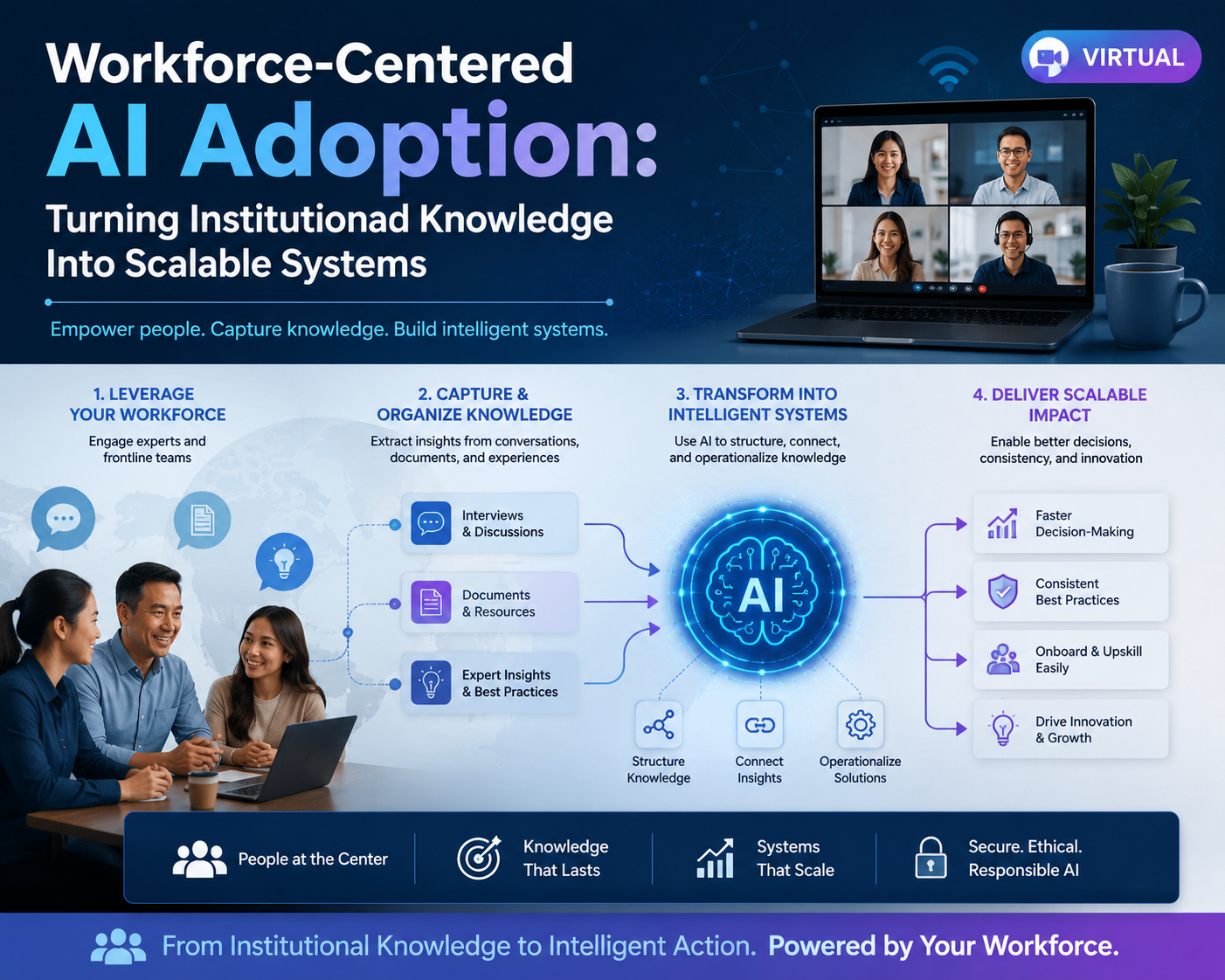
Most industrial organizations are not starting from zero. They are starting from systems that already work—just not in ways that scale easily. Legacy workflows often represent years of optimization under real constraints. They are imperfect, but they are functional. This is why modernization is rarely a technical problem alone—it is a continuity problem.  The goal is not to replace what works. The goal is to reduce friction while preserving operational stability.
By Jonathan Liebert July 15, 2026
Most industrial organizations are not starting from zero. They are starting from systems that already work—just not in ways that scale easily. Legacy workflows often represent years of optimization under real constraints. They are imperfect, but they are functional. This is why modernization is rarely a technical problem alone—it is a continuity problem. The goal is not to replace what works. The goal is to reduce friction while preserving operational stability.