

AI Is Changing Jobs — But Not in the Way We Think

A repeatable workflow defines more than what to type into the chat.

It establishes:

  • When the process begins
  • Which information is required
  • Which documents control
  • What the AI is expected to do
  • What the output should contain
  • What a person must verify
  • Where the final record belongs

Without those elements, the process may still work, but only for the person who created it.

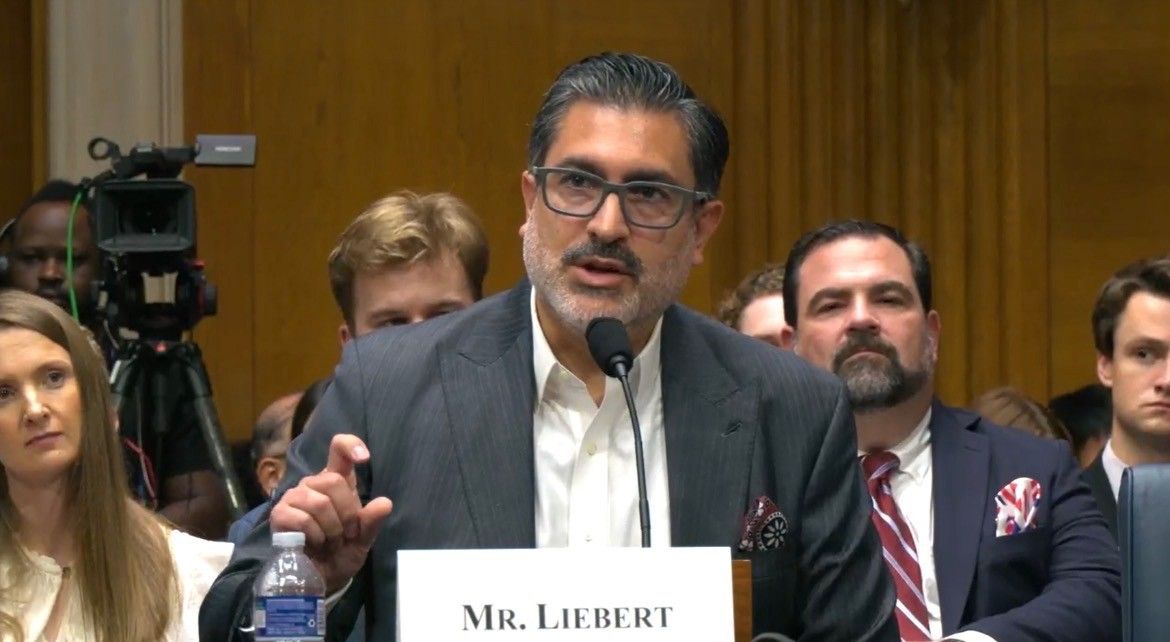
Recently, I had the privilege of testifying before the U.S. Senate about artificial intelligence and its transformative impact on the modern workforce. It was an opportunity to discuss an issue that is quickly becoming one of the defining economic questions of our time: What is AI actually going to do to jobs?


The conversation around artificial intelligence often gravitates toward extremes. On one side is the promise that AI will dramatically increase productivity and create entirely new industries. On the other is the fear that automation will eliminate millions of jobs. The reality emerging from the data is more complicated — and, in many ways, more interesting.


Through leading the BBB AI Hub and training thousands of business owners, nonprofit leaders and workers on the responsible use of artificial intelligence, I have come to believe that AI literacy is increasingly becoming the difference between leverage and liability. I have watched people use AI to organize complex information, improve communication, accelerate research, analyze data and turn ideas into action faster than ever before.


I have also watched people enter sensitive customer information into public AI systems, accept fabricated citations as fact, rely on biased or incomplete outputs and purchase products labeled “AI-powered” without really understanding what the technology does.


The opportunity is enormous. But so is the responsibility. And nowhere is that becoming more evident than in the workforce.

AI Is Reshaping Jobs, Not Simply Eliminating Them

PwC recently released its 2026 Global AI Jobs Barometer, analyzing more than one billion online job advertisements across six continents. One of its most important conclusions is that AI is not simply replacing jobs. Instead, it is fundamentally changing the work people perform inside those jobs.


PwC describes an emerging two-track labor market. In one category are what the researchers call “professionalised” jobs. In these positions, AI increasingly handles routine or lower-level tasks, allowing workers to concentrate on more complex work requiring expertise, judgment and creativity. In the other category are “democratised” jobs, where AI makes traditionally complex work easier to perform, lowering some of the expertise barriers that once existed. That distinction is important because the economic outcomes are already beginning to look very different.


Professionalised jobs have been growing approximately twice as fast as democratised jobs, and PwC found that salaries in professionalised occupations have grown 42% faster since 2021.


That tells us something important about the future of work. The question may not simply be, “Will AI replace this job?” A better question may be, “How will AI change what a person is expected to contribute in this job?”

The Companies Winning With AI May Actually Hire More People

One of the most fascinating findings in the PwC study challenges the common assumption that greater AI adoption automatically means fewer employees. PwC found that greater exposure to AI was associated with headcount growth rather than headcount reduction among the companies it studied. The report found that headcount growth among the most AI-exposed organizations was roughly double that of the least-exposed organizations.


Why?

Because the companies generating the greatest returns from AI do not appear to be using the technology simply to cut positions.


They are using AI to grow.


They are redesigning processes, increasing productivity, entering new markets, creating new products and services and expanding what their existing workforce can accomplish. PwC discovered an especially interesting “superstar” effect. The most AI-exposed companies overall experienced strong productivity growth, but the top-performing 20% of those organizations achieved productivity growth of approximately 163% compared with a 2018 baseline.


That may provide an important lesson for Colorado businesses. If your AI strategy is simply, “How many people can we replace?” you may be asking the wrong question.

The more powerful question is: “What could our organization accomplish if every employee became significantly more AI capable?”

The Worker of the Future Will Need AI Skills — and Human Skills

The other major shift occurring in the workforce is skills. According to PwC, the skills required in the occupations most exposed to AI are changing more than twice as fast as those in jobs with relatively little AI exposure. And there is an interesting paradox.


As AI becomes more capable, human capabilities may actually become more valuable.


PwC found that new tasks emerging in AI-exposed occupations are increasingly connected to abilities such as empathy, judgment, creativity and leadership. AI can summarize a 100-page document in seconds. But someone still needs to determine what matters.


AI can generate ten strategic options. Someone still needs the judgment to choose among them.


AI can draft an email. Someone still needs to understand the relationship, the context and the human being receiving it.


That is why I believe the future belongs neither to humans alone nor AI alone. It belongs to people who learn how to work intelligently with AI while strengthening the distinctly human capabilities technology cannot easily replicate.

Entry-Level Work May Change the Most

This transition could be particularly significant for younger workers. PwC found that highly AI-exposed entry-level jobs are now seven times more likely to require traditionally senior-level skills than entry-level jobs with low AI exposure. Those skills include team building, stakeholder management, people management, mentorship and data-driven decision-making.


That presents both a challenge and an opportunity. AI may eliminate some of the repetitive work previous generations performed early in their careers. But that also means younger workers may be expected to develop judgment, leadership and strategic thinking much earlier. This is a very important finding and one that our education and workforce systems will need to adapt accordingly.


Therefore, AI Literacy Is Becoming Workforce Literacy and the demand for AI capability is already showing up in compensation and hiring. PwC reports that workers with AI skills commanded an average 62% wage premium compared with workers in comparable roles that did not require those skills. And hiring for AI specialists grew eight times faster than overall hiring in 2025. But I do not believe every employee needs to become a machine-learning engineer. What they need is AI literacy.


They need to understand what these systems can do, where they fail, how to protect information, how to verify outputs and how to use AI as a thought partner rather than blindly accepting whatever it produces. For business leaders, responsible AI adoption means doing more than purchasing software. It means investing in your people. The organizations that thrive in the coming decade may not be those with the most AI.


They may be the organizations with the most AI-capable workforce, people who know when to use the technology, when to question it and when human judgment must remain firmly in control.


That was one of the messages I hoped to convey in Washington. The future of work is not simply about what AI can do. It is about what people can do when they learn how to use AI well.

Share this article

Recent Posts

2026 Global AI Jobs Barometer
August 14, 2026
PwC’s 2026 Global AI Jobs Barometer goes beyond the question of whether AI will “take jobs.” It explores how AI is changing the structure of work itself and what those changes could mean for employers, employees and people just entering the workforce.

August 12, 2026
Someone on your team has probably figured out a good way to use AI. Maybe it helps compare requirements against a deliverable, organize closeout documents, prepare an action log, or summarize project reporting. The prompt works. The result is useful. The person who built it knows exactly what to provide, how to phrase the instructions, and what needs to be checked afterward. Then someone else tries to use it. That is usually when the team discovers that a good prompt is not yet a repeatable construction workflow. The second person uploads the wrong version of the specifications. The output comes back in a different format. A requirement is missed. Nobody knows whether the AI used the contract, the addendum, or the folder labeled: FINAL — USE THIS ONE The problem is not necessarily the AI. The process was never fully defined.
Jonathan Liebert CEO of the BBB of Southern Colorado
By Jonathan Liebert July 31, 2026
Jonathan Liebert CEO of the BBB of Southern Colorado testifies before congress on the Impact of AI on the Workforce

By Jonathan Liebert July 15, 2026
AI already knows a lot. That is not really the problem. The challenge is teaching it what matters to your business. It does not automatically know your customers. It does not know your tone. It does not know your standards. It does not know your process. It does not know which details are important and which ones will send your team into a group text spiral. That is where the skill comes in. Using AI well is not just about asking better questions. It is about teaching AI what you want it to know so it can give you answers that are actually useful. That is the focus of the class I am teaching through the BBB AI Hub: Teaching AI your Business: Building Context That Actually Works. We are going to talk about how to use ChatGPT settings, Projects, and Custom GPTs to give AI better business context. Not in a complicated way. In a practical way. Because most business owners do not need more AI hype. They need to understand how to make AI useful in the work they are already doing.

By Jonathan Liebert July 15, 2026
Most industrial organizations are not starting from zero. They are starting from systems that already work—just not in ways that scale easily. Legacy workflows often represent years of optimization under real constraints. They are imperfect, but they are functional. This is why modernization is rarely a technical problem alone—it is a continuity problem.  The goal is not to replace what works. The goal is to reduce friction while preserving operational stability.

By Jonathan Liebert July 15, 2026
Most industrial organizations are not starting from zero. They are starting from systems that already work—just not in ways that scale easily. Legacy workflows often represent years of optimization under real constraints. They are imperfect, but they are functional. This is why modernization is rarely a technical problem alone—it is a continuity problem. The goal is not to replace what works. The goal is to reduce friction while preserving operational stability.

By Jonathan Liebert June 12, 2026
Anthropic’s new Claude Fable 5 may be one of the most important AI model releases of the year, not just because of what it can do, but because of what it signals about where artificial intelligence is heading. Fable 5 is part of Anthropic’s new Mythos-class family of models, which sits above its previous Claude Opus models in capability. In plain English, this is not just a better AI model. This is a much more powerful system designed for complex work: software engineering, advanced research, long document analysis, scientific reasoning, visual understanding, and agentic workflows that can run across multiple steps. For business owners, that should get your attention. The promise of Fable 5 is significant. It can work on longer, harder, more complex assignments with greater endurance than earlier models. That means it may be useful for drafting strategic plans, reviewing large policy documents, analyzing contracts, supporting technical projects, building internal tools, developing training materials, summarizing research, or helping a team reason through complicated business decisions. This is the kind of AI that starts to feel less like an assistant and more like a high-level analyst. For small businesses, that is exciting. Many owners do not have a research department, a software team, or a strategic planning office. A model like Fable 5 could help smaller organizations access capabilities that used to be available only to large companies with deep benches of talent. That is the optimistic view. But there is another side to this release that small business owners should pay attention to: cost and access . Fable 5 is currently available in Claude for a limited time, with access expected to end on June 22, giving users a short window to experience one of Anthropic’s most advanced public models before access changes. But long term, this type of intelligence will not be cheap. Anthropic’s listed pricing for Fable 5 is reportedly $10 per million input tokens and $50 per million output tokens . For large enterprises, that may be manageable. For small businesses, nonprofits, and solo entrepreneurs, that pricing could quickly become a serious barrier. In everyday terms, this means Fable 5 may be affordable for an occasional high-value project, but expensive for constant daily use. Asking it to review one large report may cost only a few dollars. But using it all day across employees, documents, drafts, agents, and revisions could become a meaningful monthly expense very quickly. The concern is that Fable 5 is roughly double the cost of Claude Opus 4.8. That tells us something important: as models become more powerful, the best AI may not simply become cheaper. The market may split between everyday models for routine tasks and premium frontier models reserved for complex, high-value work. That may be the bigger story. For the past few years, small businesses have benefited from an incredible moment in technology: advanced AI was suddenly available through relatively affordable monthly subscriptions. A local business owner could access tools that felt almost magical for the price of a software subscription. That created a sense that increasingly powerful AI would always become cheaper and more accessible. Fable 5 raises a different possibility. What if the most powerful models become premium tools that only larger organizations can afford to use regularly? What if small businesses get access to “good enough” AI, while major corporations use the most advanced models for strategy, automation, coding, research, product development, and decision-making? That would be a major shift. Instead of AI closing the gap between small and large businesses, it could begin widening it again. Larger companies would have access to better reasoning, better automation, better agents, and better strategic support. Smaller firms might be forced to ration use, rely on cheaper models, or avoid advanced workflows because the cost is too unpredictable. This does not mean small businesses should ignore Fable 5. Quite the opposite. If you have access to it, test it. Use it on high-value work where quality really matters. Ask it to analyze a strategic plan, compare vendors, review a complicated proposal, summarize a large report, or help think through a major decision. Do not waste a model like this on routine emails or simple brainstorming. Use your most powerful AI where the return justifies the cost. There are also safety considerations. Anthropic has emphasized that Fable 5 includes safeguards around high-risk topics such as cybersecurity, biology, and chemistry. That matters because as AI becomes more capable, the risk of misuse also grows. Businesses should appreciate that the industry is taking safety seriously. But safety systems can also affect usefulness, especially when models become more cautious or restricted in certain areas. So where does this leave small businesses? The best approach is strategic adoption. Start by understanding which AI tasks are truly valuable for your organization. Use lower-cost models for routine work. Reserve frontier models like Fable 5 for complex, high-value projects. Train your team to understand when powerful AI is needed and when it is not. Track cost. Protect sensitive data. Keep humans involved in final decisions. Claude Fable 5 gives us a glimpse of the next era of AI: more powerful, more autonomous, more capable — and likely more expensive. That does not mean small businesses are out of the race. But it does mean they need to become smarter buyers and better managers of AI. The future of AI may not simply be about who has access to the best model. It may be about who knows when to use it, how to use it, and whether the value justifies the cost. That is the real AI Advantage. About the Author Jonathan Liebert is CEO/Executive Director of the Better Business Bureau of Southern Colorado, an AI thought leader and an adjunct professor at the University of Colorado Colorado Springs. He is the author of Thought Partner , which explores how leaders can collaborate with AI to improve decision-making and strategy. Jonathan also leads AI education and training programs through BBB of Southern Colorado to help businesses build practical AI skills for the modern marketplace.
Why OpenAI’s New Warning Matters for Small Business
By Jonathan Liebert June 10, 2026
Why OpenAI’s New Warning Matters for Small Business
June 9, 2026
Teaching for Tomorrow: Closing the expectations gap What happens when teachers are asked to do the impossible? New research from the Walton Family Foundation and Gallup examines how teachers experience their job demands. The Teaching for Tomorrow study reveals just how much unrealistic expectations and lack of role clarity impact key outcomes like job satisfaction and intention to remain in the classroom. While the research finds that many teachers face unrealistic or unclear expectations, it also confirms that with improved job expectations, teachers thrive.