

When ChatGPT Starts Showing Ads, What Changes for Small Business Visibility

If you’ve used ChatGPT regularly, you’ve probably noticed how quickly it’s becoming a go-to place for answers, recommendations, and decision support. OpenAI’s recent announcement that it will begin testing paid ads for some U.S. users signals something bigger than a new revenue stream, it marks AI’s evolution into a true mass-market discovery platform.


What’s changing is the format of visibility. Ads will appear only for free users and a new low-cost “Go” plan, clearly labeled and shown separately from the AI’s response. Paid subscriptions will remain ad-free. These ads are designed to align with user intent, appearing inside a conversational experience rather than alongside a list of search results.


ChatGPT is now approaching 900 million weekly users, and roughly 95% of them are on free plans. That reality explains why ads are entering the picture and why this shift deserves attention from small businesses. When nearly a billion people use a single tool to ask questions and evaluate options, how businesses show up in that environment matters.


For small businesses, this reflects a familiar pattern in a new place. Consumer discovery continues to move closer to the moment of decision. But AI doesn’t replace trust; it magnifies it. Paid placement may create awareness, yet reputation, transparency, and consistency still shape whether a business is recommended, believed, or chosen.


The takeaway: as AI becomes a starting point for consumer decisions, visibility alone isn’t enough. Businesses that invest in trust will be better positioned—whether they ever buy an AI ad or not.


About the Author

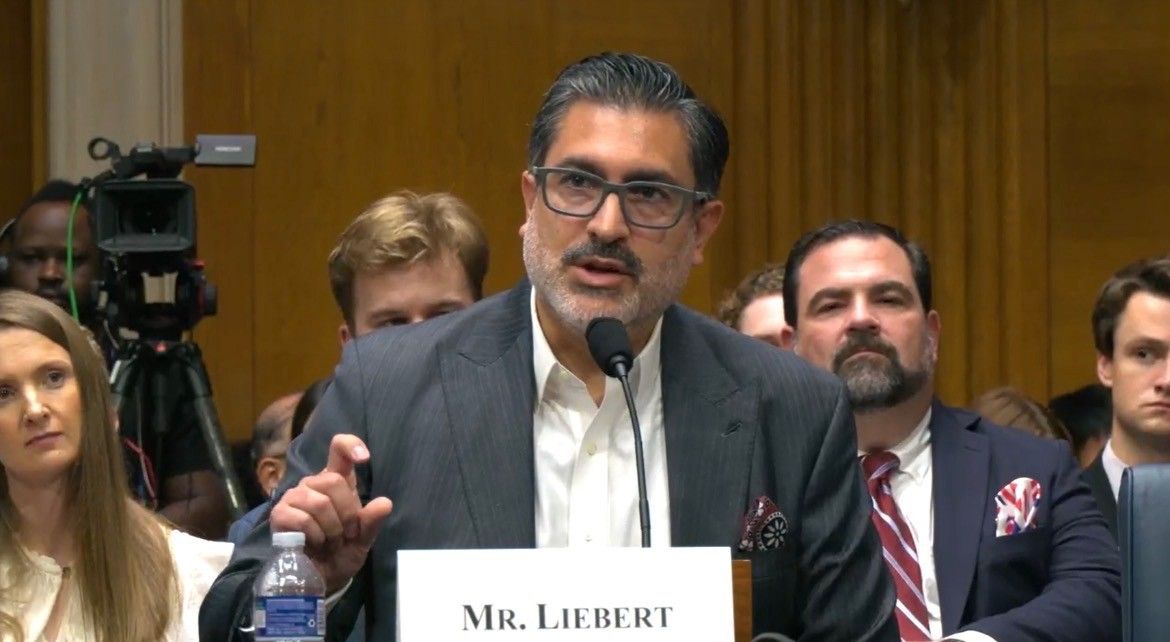
Jonathan Liebert is CEO/Executive Director of the Better Business Bureau of Southern Colorado, an AI thought leader and an adjunct professor at the University of Colorado Colorado Springs. He is the author of
Thought Partner, which explores how leaders can collaborate with AI to improve decision-making and strategy. Jonathan also leads AI education and training programs through BBB of Southern Colorado to help businesses build practical AI skills for the modern marketplace.


Share this article

Recent Posts

By Jonathan Liebert June 12, 2026
Anthropic’s new Claude Fable 5 may be one of the most important AI model releases of the year, not just because of what it can do, but because of what it signals about where artificial intelligence is heading. Fable 5 is part of Anthropic’s new Mythos-class family of models, which sits above its previous Claude Opus models in capability. In plain English, this is not just a better AI model. This is a much more powerful system designed for complex work: software engineering, advanced research, long document analysis, scientific reasoning, visual understanding, and agentic workflows that can run across multiple steps. For business owners, that should get your attention. The promise of Fable 5 is significant. It can work on longer, harder, more complex assignments with greater endurance than earlier models. That means it may be useful for drafting strategic plans, reviewing large policy documents, analyzing contracts, supporting technical projects, building internal tools, developing training materials, summarizing research, or helping a team reason through complicated business decisions. This is the kind of AI that starts to feel less like an assistant and more like a high-level analyst. For small businesses, that is exciting. Many owners do not have a research department, a software team, or a strategic planning office. A model like Fable 5 could help smaller organizations access capabilities that used to be available only to large companies with deep benches of talent. That is the optimistic view. But there is another side to this release that small business owners should pay attention to: cost and access . Fable 5 is currently available in Claude for a limited time, with access expected to end on June 22, giving users a short window to experience one of Anthropic’s most advanced public models before access changes. But long term, this type of intelligence will not be cheap. Anthropic’s listed pricing for Fable 5 is reportedly $10 per million input tokens and $50 per million output tokens . For large enterprises, that may be manageable. For small businesses, nonprofits, and solo entrepreneurs, that pricing could quickly become a serious barrier. In everyday terms, this means Fable 5 may be affordable for an occasional high-value project, but expensive for constant daily use. Asking it to review one large report may cost only a few dollars. But using it all day across employees, documents, drafts, agents, and revisions could become a meaningful monthly expense very quickly. The concern is that Fable 5 is roughly double the cost of Claude Opus 4.8. That tells us something important: as models become more powerful, the best AI may not simply become cheaper. The market may split between everyday models for routine tasks and premium frontier models reserved for complex, high-value work. That may be the bigger story. For the past few years, small businesses have benefited from an incredible moment in technology: advanced AI was suddenly available through relatively affordable monthly subscriptions. A local business owner could access tools that felt almost magical for the price of a software subscription. That created a sense that increasingly powerful AI would always become cheaper and more accessible. Fable 5 raises a different possibility. What if the most powerful models become premium tools that only larger organizations can afford to use regularly? What if small businesses get access to “good enough” AI, while major corporations use the most advanced models for strategy, automation, coding, research, product development, and decision-making? That would be a major shift. Instead of AI closing the gap between small and large businesses, it could begin widening it again. Larger companies would have access to better reasoning, better automation, better agents, and better strategic support. Smaller firms might be forced to ration use, rely on cheaper models, or avoid advanced workflows because the cost is too unpredictable. This does not mean small businesses should ignore Fable 5. Quite the opposite. If you have access to it, test it. Use it on high-value work where quality really matters. Ask it to analyze a strategic plan, compare vendors, review a complicated proposal, summarize a large report, or help think through a major decision. Do not waste a model like this on routine emails or simple brainstorming. Use your most powerful AI where the return justifies the cost. There are also safety considerations. Anthropic has emphasized that Fable 5 includes safeguards around high-risk topics such as cybersecurity, biology, and chemistry. That matters because as AI becomes more capable, the risk of misuse also grows. Businesses should appreciate that the industry is taking safety seriously. But safety systems can also affect usefulness, especially when models become more cautious or restricted in certain areas. So where does this leave small businesses? The best approach is strategic adoption. Start by understanding which AI tasks are truly valuable for your organization. Use lower-cost models for routine work. Reserve frontier models like Fable 5 for complex, high-value projects. Train your team to understand when powerful AI is needed and when it is not. Track cost. Protect sensitive data. Keep humans involved in final decisions. Claude Fable 5 gives us a glimpse of the next era of AI: more powerful, more autonomous, more capable — and likely more expensive. That does not mean small businesses are out of the race. But it does mean they need to become smarter buyers and better managers of AI. The future of AI may not simply be about who has access to the best model. It may be about who knows when to use it, how to use it, and whether the value justifies the cost. That is the real AI Advantage. About the Author Jonathan Liebert is CEO/Executive Director of the Better Business Bureau of Southern Colorado, an AI thought leader and an adjunct professor at the University of Colorado Colorado Springs. He is the author of Thought Partner , which explores how leaders can collaborate with AI to improve decision-making and strategy. Jonathan also leads AI education and training programs through BBB of Southern Colorado to help businesses build practical AI skills for the modern marketplace.
Why OpenAI’s New Warning Matters for Small Business
By Jonathan Liebert June 10, 2026
Why OpenAI’s New Warning Matters for Small Business
June 9, 2026
Teaching for Tomorrow: Closing the expectations gap What happens when teachers are asked to do the impossible? New research from the Walton Family Foundation and Gallup examines how teachers experience their job demands. The Teaching for Tomorrow study reveals just how much unrealistic expectations and lack of role clarity impact key outcomes like job satisfaction and intention to remain in the classroom. While the research finds that many teachers face unrealistic or unclear expectations, it also confirms that with improved job expectations, teachers thrive.
Human Judgement Still Matters
June 8, 2026
AI is a powerful tool - but when it comes to values, people and consequences, human judgement still matters.
June 5, 2026
One of the best places to begin your AI journey — or refresh what you already know — is the Everyday AI podcast’s Start Here Series . This resource does a great job breaking down the basics of artificial intelligence in a way that is clear, practical, and easy to understand. Whether you are just getting started, trying to fill in the gaps, or looking for a simple way to stay current with how AI is changing work and business, this series is a helpful guide. It takes complex ideas and makes them accessible, giving listeners a strong foundation for understanding how AI tools can be used thoughtfully and effectively.  For small business owners, nonprofit leaders, and professionals who want to better understand AI without getting overwhelmed, this is a great place to start!
AI Tokens and The Economics of AI
June 5, 2026
AI Tokens and The Economics of AI how AI pricing actually works and how small businesses can get the most value from it
By Jonathan Liebert May 29, 2026
Anthropic’s newest Claude Opus 4.8 model is another reminder that the AI race is not slowing down. In 2025, ChatGPT and Gemini often dominated headlines. However, in 2026, Claude has quietly become one of the strongest AI platforms for reasoning, writing, coding, analysis, and complex knowledge work. This year, the headlines have mostly been about Anthropic. For small businesses, the most important takeaway is this: Claude is becoming less like a chatbot and more like a serious business collaborator. One of the biggest upgrades is stronger reasoning control. Claude Opus 4.8 gives users more ability to adjust how much effort the model puts into a task. That matters because not every job requires the same level of AI horsepower. A quick email draft does not need the same deep reasoning as a contract review, strategic plan, financial analysis, or complex customer research project. Better controls allow businesses to match the model to the task. The second major feature is Claude’s growing strength with agentic workflows. In Claude Code, the model can now plan larger projects, break them into smaller pieces, and run multiple sub-tasks in parallel. For technical teams, that could help with software updates, code reviews, migrations, testing, and documentation. For non-technical business leaders, it signals where all AI tools are heading: toward systems that can manage complex work, not just answer questions. The third feature is deeper collaboration. Claude has become especially useful for long documents, policy reviews, grant writing, board reports, training materials, and strategic planning. It is strong at taking messy information and turning it into something structured, thoughtful, and usable. But there is a caution. More powerful AI can also mean higher usage costs, faster rate-limit issues, and greater risk if employees use it without clear guidance. Businesses should not simply turn these tools loose on sensitive data or expensive workflows without a plan. Clade is one of the most expensive models out there, so you need to make sure you are using it correctly. The smartest approach is simple: start with high-value, low-risk tasks. Use Claude to draft, summarize, analyze, and organize. Keep humans involved in final decisions. Track cost, quality, and time saved. Claude Opus 4.8 shows where AI is heading: more capable, more collaborative, and more embedded in real work. For small businesses, that is a major opportunity — if used wisely. About the Author Jonathan Liebert is CEO/Executive Director of the Better Business Bureau of Southern Colorado, an AI thought leader and an adjunct professor at the University of Colorado Colorado Springs. He is the author of Thought Partner, which explores how leaders can collaborate with AI to improve decision-making and strategy. Jonathan also leads AI education and training programs through BBB of Southern Colorado to help businesses build practical AI skills for the modern marketplace.
AI Vocabulary
May 27, 2026
AI Vocabulary brought to you by the BBB of Southern Colorado
AI as a Productive Multiplier
May 27, 2026
AI as a Productive Multiplier brought to you by the BBB of Southern Colorado